I Speak Mermaid
First Impressions: Whimsy with Wearability
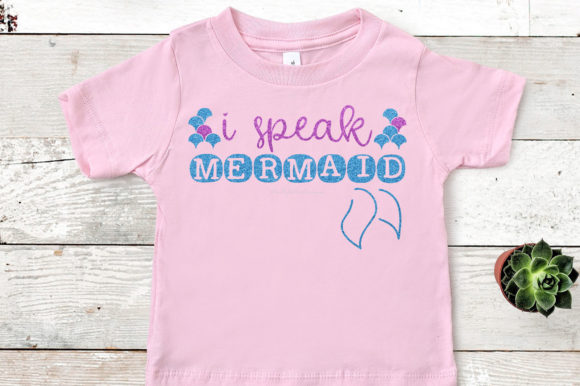
When I opened I Speak Mermaid for the first time, I didn’t see just another mermaid quote—I saw a design that breathes summer air and childhood wonder without tipping into cutesy overload. The lettering is friendly but intentional: rounded, slightly bouncy, with clean spacing that gives it room to breathe on fabric. The integrated mermaid tail and scales aren’t tacked on—they’re part of the rhythm, wrapping subtly beneath the phrase like a secret only the wearer knows. It feels like a design made *for* embroidery, not just adapted to it. That matters—especially when you’re stitching 50 custom tote bags for a boutique launch or prepping baby onesies for a mermaid-themed baby shower.
A Real Project Test: Embroidering It on a Linen-Cotton Tea Towel
Last week, I used I Speak Mermaid on a set of kitchen towels for a small shop client. Linen-cotton blend, medium weight, slightly textured—not the easiest ground for crisp lettering. I chose a matte navy thread on off-white fabric, added medium-weight tear-away stabilizer, and stitched at 75% density (a quick test run confirmed full coverage without puckering). The result? Legible, charming, and quietly confident. Customers didn’t just say “It’s cute”—they paused, smiled, and said, “That feels *handmade*, not mass-produced.” That’s the quiet power of this design: it elevates a simple tea towel into a personalized gift or boutique staple without shouting.
Where It Shines—and Where It Needs Careful Handling
I Speak Mermaid thrives on stable, mid-weight fabrics: cotton tees, denim jackets, canvas totes, twill aprons, and soft sweatshirts. As a machine embroidery design, it holds up beautifully on curved surfaces like baseball caps—just keep the tail element away from the front seam where distortion creeps in. For baby embroidery, scale it down slightly (but no smaller than 3.5” wide) to preserve clarity in the scales and letter curves. On stretchy fabric like jersey knits? Use cut-away stabilizer and reduce stitch density by 10–15%—the satin-stitched curves can pull if over-packed.
It’s less ideal for ultra-fine applications: tiny hoop sizes under 4”, delicate silk, or heavily textured burlap where detail gets lost. The tail’s subtle layering and the fine lines between scales mean dense fill stitches need breathing room. If you’re planning an embroidered patch, confirm the design includes clean outer edges and minimal underlay—otherwise, trimming becomes fussy. And on dark fabric? Always test thread contrast. A light aqua may vanish on charcoal; swap to a pearlescent white or seafoam for visibility without sacrificing theme.
What This Design Does for Your Craft Business
As an Etsy seller and small shop product developer, I judge designs not just by aesthetics—but by how they impact perceived value, trust, and repeat interest. I Speak Mermaid delivers on all three. It reads as joyful but not juvenile—making it viable for teen apparel, mom-and-me matching sets, and even whimsical bridal shower gifts (think: embroidered pillow covers for the “mermaid squad”). Customers recognize the theme instantly, which boosts engagement in listings and craft fairs. More importantly, its balanced composition means fewer customer questions about sizing or placement—it’s intuitive to position and scale.
For digital embroidery file sellers, this is strong design assets material. It pairs well with coordinating seashell motifs or wave borders—so consider bundling it thoughtfully. Just remember: if you’re reselling finished items, verify the license permits commercial embroidery use. Many Graphics category files do—but never assume.
Practical Designer Notes You’ll Actually Use
- Always test on scrap fabric first—especially with textured or dark backgrounds. What looks sharp on screen rarely translates 1:1.
- Check thread color contrast before stitching a full batch. Try your top three options side-by-side on a printed mockup.
- Review stitch density in your embroidery software. If the tail appears overly dense or the letters look heavy, reduce fill stitch count by 5–10%.
- Confirm hoop size compatibility. This design fits comfortably in a 5x7 hoop at standard size—but if you’re scaling for baby onesies, verify it clears your smallest hoop.
- Inspect small details at 200% zoom: are the scale edges clean? Do any letters have unintended jump stitches? Fix those before cutting.
- Test black-and-white mockups—they reveal legibility issues faster than color previews.
- Use proper stabilizer: medium tear-away for stable wovens, cut-away for knits, and lightweight fusible for lightweight linens.
- Verify licensing before selling finished embroidered products or digital bundles—especially if marketing to other crafters or small businesses.
Final Thought: Not Just a Summer Trend—A Staple With Soul
I Speak Mermaid isn’t a flash-in-the-pan seasonal shir—it’s a thoughtful Crafts category piece with staying power. It works year-round: scaled down on holiday stockings, enlarged on beach blankets, softened with pastel threads for nursery decor. Its strength lies in restraint—the tail enhances, doesn’t overwhelm; the lettering invites, doesn’t shout. For handmade product creators, that balance is gold. It lets your craftsmanship shine, not just the design. Whether you’re embroidering a single personalized gift or building a cohesive line of mermaid-themed merchandise, I Speak Mermaid earns its place in your embroidery project queue—not because it’s trendy, but because it’s trustworthy, adaptable, and quietly professional.