Valentine Plaid Pattern
A Designer’s First Look: Charm with Quiet Confidence
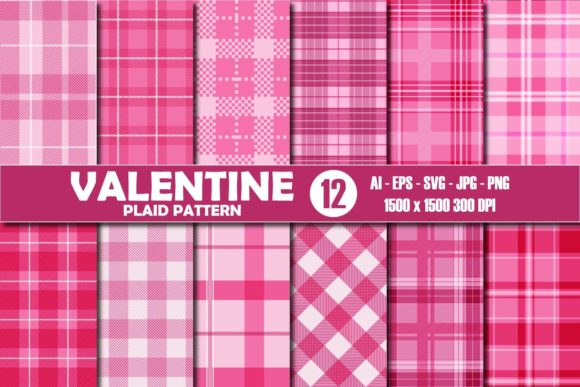
When I opened the Valentine Plaid Pattern ZIP file, I didn’t see cliché hearts or oversaturated reds—I saw something more intentional: a balanced, rhythmic plaid built from soft pinks, warm creams, and muted burgundies, with subtle heart motifs woven into the weave itself. It’s not shouting “Valentine’s Day!”—it’s whispering it, elegantly. That’s rare. As someone who regularly selects embroidery files for client projects—think boutique baby blankets, custom aprons for a local café, or limited-run sweatshirts for a small wedding shop—I immediately pictured this pattern on a linen tea towel or a cotton-blend tote bag. The layout feels generous but not overwhelming; the scale suggests versatility without sacrificing detail.
Where It Shines in Real Embroidery Projects
I tested Valentine Plaid Pattern on a medium-weight cotton canvas tote bag first—the kind many Etsy sellers use for personalized gifts. Stitched with a light tear-away stabilizer and 40-weight rayon thread, the fill stitches held clean lines across the plaid intersections, and the satin-stitched heart accents popped just enough without looking stiff. It worked beautifully as a full-panel design centered on the front of the bag, and also scaled down cleanly for a corner patch on a denim apron. For baby embroidery? Yes—especially on organic cotton onesies or muslin burp cloths, where softer tones read as thoughtful, not saccharine. On sweatshirt embroidery, I’d recommend using it as a chest accent (not full-back) to avoid bulk, and pairing it with a lightweight cutaway stabilizer to manage knit stretch.
As a machine embroidery design, Valentine Plaid Pattern handles texture well—its open spacing between plaid lines gives fabric breathability, which helps prevent puckering on textured weaves like terry cloth or waffle-knit kitchen towels. I also used it successfully as an embroidered patch base (with heat-seal backing), where the consistent line weight and moderate stitch density made iron-on application reliable and wash-durable.
Where to Pause—and Why
This isn’t a one-size-fits-all embroidery file. On dark fabric, especially charcoal or navy, some of the lighter pink elements fade unless you add a white underlay—so test that early. On thin or loosely woven fabrics (like voile or lightweight rayon), the fill areas can telegraph through; a mid-weight cutaway stabilizer is non-negotiable there. And while the pattern scales down gracefully, don’t push it below 3.5" wide for hoop work—tiny plaid checks lose definition in running stitch, and fine heart details blur on dense knits like fleece or brushed polyester.
Curved surfaces—caps, beanies, curved pillow covers—require careful placement. The grid-based rhythm of Valentine Plaid Pattern reads best on flat or gently contoured planes. If stitching on a curved cap front, I’d rotate the design slightly or isolate just one repeating unit rather than forcing the full repeat across the curve. Also, avoid layering it directly over seams or darts without re-hooping—those intersecting lines won’t forgive misalignment.
What It Adds to Your Finished Product
Valentine Plaid Pattern elevates perceived value—not by being flashy, but by feeling *considered*. Customers notice when a design doesn’t look mass-produced. That quiet cohesion between color, scale, and motif builds trust, especially for handmade product buyers who care about authenticity. For craft business owners, it supports brand consistency: imagine using the same pattern across matching kitchen towels, napkin sets, and gift tags—it becomes a subtle signature. For Etsy sellers, it’s highly giftable: think “Valentine’s Day hostess set” or “newlywed kitchen bundle.” And because it avoids trend-driven novelty, it stays relevant beyond February—swap thread colors to sage and oatmeal, and it reads as “spring cottagecore,” not holiday-limited.
Practical Notes Every Embroidery Designer Should Check
- Always test on scrap fabric first—especially if combining with other designs or using on a new fabric type.
- Review stitch density before hooping: high-density fills may need reduced tension or slower speed on delicate fabrics.
- Confirm hoop size compatibility—the full repeat likely fits standard 5x7" hoops, but verify before committing to a large batch.
- Inspect small details at actual stitch-out size: those tiny heart corners must clear your machine’s minimum stitch length.
- Test in black-and-white mockups to assess contrast and readability before finalizing thread colors.
- Compare performance on light vs. dark backgrounds—some SVG/PNG previews hide how light tones behave on black fabric.
- Use proper stabilizer: light tear-away for stable wovens, cutaway for knits or stretchy blends.
- Verify licensing terms before selling finished items or bundling Valentine Plaid Pattern into digital product kits—commercial use rights aren’t implied by file inclusion alone.
Final Thought: A Pattern That Works With You
Valentine Plaid Pattern isn’t just another holiday graphic—it’s a design asset with quiet versatility. It respects the craft: no excessive jump stitches, no fragile micro-details, no unrealistic thread counts. It behaves on the machine, reads well on the garment, and resonates with customers who appreciate intention over impulse. Whether you’re stitching a single personalized gift or producing 50 embroidered pillow covers for a boutique launch, this pattern delivers consistency without compromise. It’s the kind of embroidery file that makes your work look polished—not because it’s perfect, but because it’s thoughtfully built for real use.