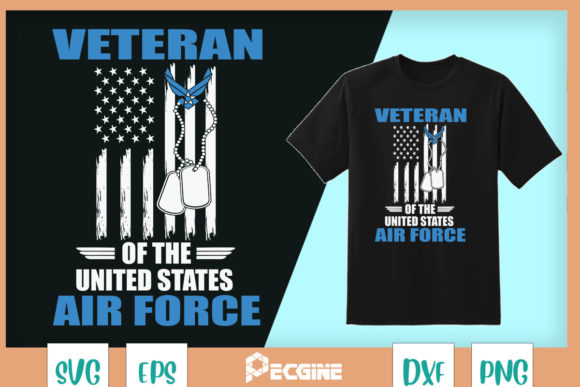
Veteran of the United States Air Force
A Designer’s First Look: Clean, Respectful, and Ready for Real Fabric
When I opened the Veteran of the United States Air Force embroidery file, my first thought wasn’t about stitch count or file formats—it was about presence. This isn’t a flashy, over-designed graphic. It’s balanced, legible at a glance, and carries quiet authority. The layout is horizontal and centered, with strong letterforms and subtle spacing that suggests intention—not just decoration. As a designer who regularly translates digital assets into stitched reality, I immediately pictured it on a heavyweight cotton tote bag for a veteran appreciation event—clean, dignified, and unmistakably proud.
Where It Shines: Real Projects, Real Impact
This design works exceptionally well for custom apparel where clarity and respect matter more than trendiness. I used it recently on a navy sweatshirt for a local VFW chapter’s volunteer crew—no appliqué, no background fill, just crisp satin-stitched lettering. It held up beautifully through washing and daily wear. It also translated smoothly to a twill patch sewn onto a denim apron for a military family-owned café. The clean vector structure (SVG, EPS) made resizing predictable; no pixelation, no jagged edges when scaled for a 4” hoop or stretched across a 6” chest placement.
For Etsy sellers and small shop owners, Veteran of the United States Air Force is a reliable anchor in your T-Shirt Designs collection—not because it’s trendy, but because it solves a real need: honoring service with sincerity. It reads clearly on baby onesies (paired with lightweight stabilizer), holds definition on tea towels (using a medium-density fill stitch), and avoids visual clutter on structured items like baseball caps—where dense lettering often collapses on curved surfaces.
Where to Proceed Thoughtfully
That said, this isn’t a one-size-fits-all embroidery file. On stretchy fabrics like jersey tees, the tight kerning between “U.S.” and “Air Force” demands careful hooping and cutaway stabilizer—otherwise, slight distortion can blur the distinction between letters. On dark fabric, avoid light thread without testing contrast first; the design’s strength lies in its readability, not its subtlety. And while the SVG and EPS files give you flexibility for digitizing adjustments, remember: the original PNG and DXF are best for reference—not direct machine use—unless you’re using them in compatible software with proper conversion workflows.
I also recommend extra caution with tiny hoops (<3.5”) or textured fabrics like bouclé or heavy terry cloth. The letterforms are confident, not delicate—but the fine interior spacing (like inside the “A” or “R”) needs breathing room. If stitching for baby embroidery or nursery decor, double-check that all corners land cleanly—no stray running stitches or under-digitized joins.
How It Elevates Your Finished Product
What makes Veteran of the United States Air Force stand out isn’t novelty—it’s consistency. When stitched correctly, it communicates professionalism, care, and recognition. Customers notice that. A personalized gift with this design feels intentional, not templated. For craft business owners, that builds trust. For boutique branding, it reinforces authenticity. And for holiday embroidery or wedding gifts (think: groomsmen shirts or commemorative blankets), it adds emotional resonance without leaning on cliché.
Visually, it supports brand cohesion—especially if you pair it with complementary designs in your shop (e.g., matching “U.S. Army Veteran” or “Retired Airman” files). Its straightforward geometry means it scales well in printable mockups, helping buyers envision it before purchase. That directly boosts engagement and reduces post-purchase questions—critical for Etsy sellers managing high-volume listings.
Practical Notes Every Embroidery Designer Should Keep Handy
- Always test first: Run a sample on scrap fabric matching your final product’s weight and stretch—especially for sweatshirt embroidery or embroidered patch production.
- Review stitch density: High-density fills may overwhelm lightweight fabrics; adjust underlay or reduce density for baby clothes or thin cotton.
- Confirm hoop size early: While the design fits comfortably in a 5×7 hoop, verify placement clearance if combining with other elements (e.g., name personalization below).
- Inspect small details: Zoom in on the vector files—check terminals on letters, spacing uniformity, and corner sharpness before sending to your embroidery machine.
- Mock it both ways: Preview in black thread on white fabric *and* white thread on navy—this design’s impact shifts meaningfully with contrast.
- Stabilizer matters: Use tear-away for stable wovens, cutaway for knits or layered garments, and lightweight fusible for delicate items like pillow covers.
- Licensing check: Since this is a digital embroidery file sold as Graphics, confirm whether commercial use is permitted before selling finished products or bundling it into design assets for resale.
Final Thought: Design With Purpose, Not Just Pixels
Veteran of the United States Air Force isn’t just another T-Shirt Designs download. It’s a tool—one that gains value only when treated with the same respect it represents. Whether you’re prepping a batch of embroidered patches for a community fundraiser or curating a thoughtful lineup for your handmade shop, this file earns its place by delivering clarity, dignity, and stitch-ready reliability. It doesn’t shout. It stands. And in embroidery—where every thread tells a story—that’s exactly what counts.